
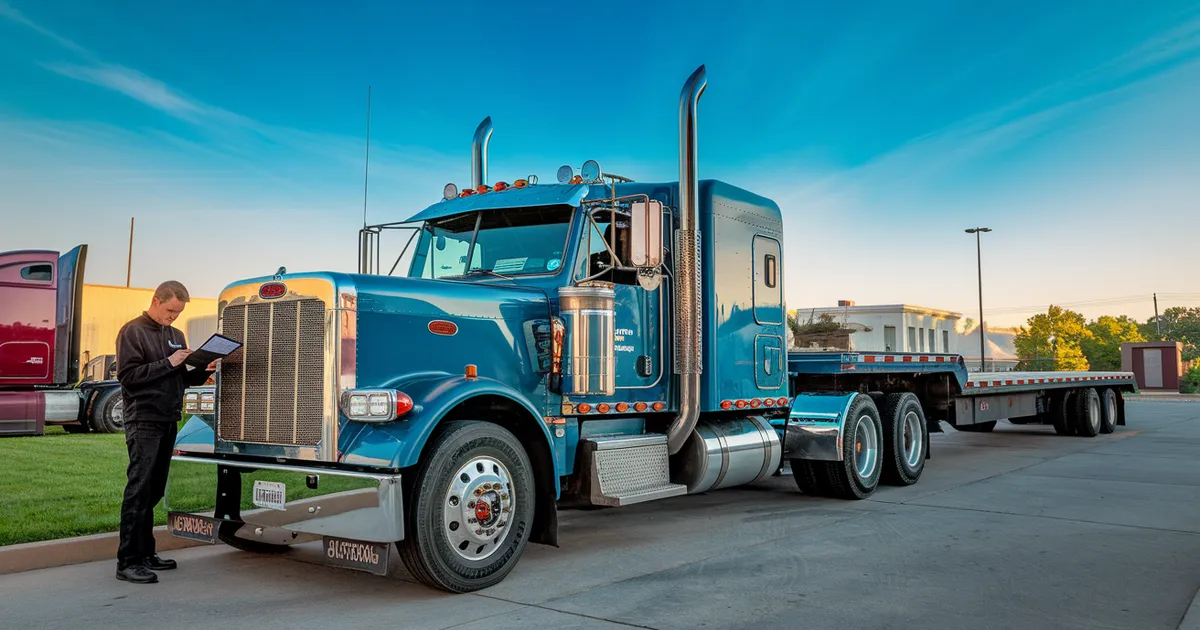
What Is Factoring in Trucking? Rates and Same-Day Pay
Factoring is selling your unpaid freight invoices to a factoring company and getting paid the same day you submit. Rates run 1.5% to 5%. The advance is up to 95% of the invoice.
It is not a loan. You are selling a receivable you already earned by delivering the load, so nothing lands on your balance sheet and there are no monthly payments. The fee comes out at funding.
Carriers use it to cover fuel, maintenance and payroll without waiting 30 to 90 days on a shipper. At MJN Services we have funded 26,000+ loads (as of 2026).
How Does Freight Factoring Work?
Five steps, repeated every load:
- Deliver the load. You haul freight as usual and obtain a signed bill of lading.
- Submit your invoice. Send the invoice and delivery documents to your factoring company.
- Receive your advance. The factoring company advances up to 95% of the invoice amount (the advance rate), less the factoring fee, which comes out here rather than later. At MJN Services, invoices received by 1:00 PM MST are paid the same day, with MJN issuing your ACH payment the same day you submit.
- Customer pays the factor. When the invoice comes due (typically 30 to 90 days), your customer pays the factoring company directly.
- Receive the balance. The factoring fee already came out at funding. The factoring company releases the reserve account balance, less any short pays, claims, or additional factoring fees.
Most factors also run credit on your customer before you accept the load, so you learn who pays slowly before you haul for them rather than after. At MJN Services, carriers are vetted in real time for authority, insurance, safety status, and fraud risk.
Who Should Use Freight Factoring?
Factoring solves a timing problem. Money goes out daily; invoices come in monthly. It fits if:
- You are a small to mid-sized carrier or owner-operator with daily expenses (fuel, maintenance, insurance) but payment terms of 30 to 90 days
- Cash flow is limiting your growth because you cannot accept new loads without capital to cover operating costs
- You are new to trucking and do not have the cash reserves to absorb long payment cycles
- Administrative overhead is high from chasing payments and running credit checks on customers
With 39,000 approved carriers in our network (as of 2026), MJN Services works with carriers at every stage, from single-truck owner-operators to mid-sized fleets.
What Does Trucking Factoring Cost?
Fees run 1.5% to 5% of invoice value. Four things set where you land:
- Invoice volume: More invoices per month usually means a lower rate per invoice
- Customer creditworthiness: Established shippers with good payment histories reduce the factoring company’s risk
- Payment terms: Shorter terms (30 days) cost less than longer terms (90 days)
- Recourse vs. non-recourse: Non-recourse factoring, where the factor absorbs the risk of non-payment, costs more than recourse factoring
At MJN Services, our factoring programs offer rates as low as 1.5% with advance rates up to 95%. Rates are published in writing before you sign. See the published rate and fee schedule.
Weigh the fee against what waiting costs. A load you turned down because fuel money was tied up in a 45-day invoice cost you more than 3%.
What Should You Get in Writing?
Four things to pin down before you sign, and what MJN does about each:
- The fee. A 1.5% to 5% fee on every invoice changes your effective rate per load, so get the number in writing and put it in your per-mile math. MJN starts at 1.5% and publishes the whole schedule.
- Recourse risk. With recourse factoring, if your customer does not pay within the agreed period (typically 60 days), you may be responsible for the invoice. With non-recourse factoring, the factoring company absorbs that risk but charges higher rates. MJN Services offers both options.
- Contract terms. Some factoring companies require long-term contracts or minimum monthly volumes. At MJN Services, initial contracts start at 90 days so you can evaluate the partnership before committing long-term.
- Customer notification. Your customers will know you use a factoring company because payments are redirected. This is standard practice in freight and rarely causes issues.
All four are manageable when the terms are in writing and the contract is short. MJN Services has served the trucking industry for 26+ years.
How Do You Choose a Factoring Company?
What to look for:
- Freight industry experience. A company that understands trucking knows about BOLs, load boards, and carrier compliance. General-purpose factoring companies may not.
- Transparent fee structure. Ask for a complete fee schedule including factoring rates, ACH fees, credit check fees, and any minimum volume requirements.
- Advance rate. The advance rate is the percentage you receive upfront. MJN advances up to 95% of the invoice face value, the same whether you run one truck or a fleet.
- Speed of funding. How quickly do they process invoices? Same-day pay means MJN issues your ACH the same day you submit, for invoices received by 1:00 PM MST.
- Customer service. Can you reach a real person when you need help? At MJN Services, carriers and agents speak directly with owners and decision-makers, not call centers.
- Flexible terms. Avoid companies that lock you into multi-year contracts or require you to factor every invoice.
For a detailed comparison of factoring versus broker quick pay programs, see our guide on factoring vs. quick pay.
Related guides
- How freight factoring works, step by step
- Is factoring worth it for your trucking business?
- Recourse vs non-recourse factoring: which to choose
- Freight factoring rates: how they work and what MJN charges
- Estimate your factoring fee with our calculator
- Freight factoring glossary: plain-language definitions of 22 terms
- How to choose the best factoring company for truckers
Ready to stop waiting for payment? Explore our factoring programs to see advance rates, fees, and how to get started, or contact us to speak with our team. With 26+ years serving the trucking industry and 127,000+ loads brokered (as of 2026), MJN Services has the experience to keep your trucks moving.